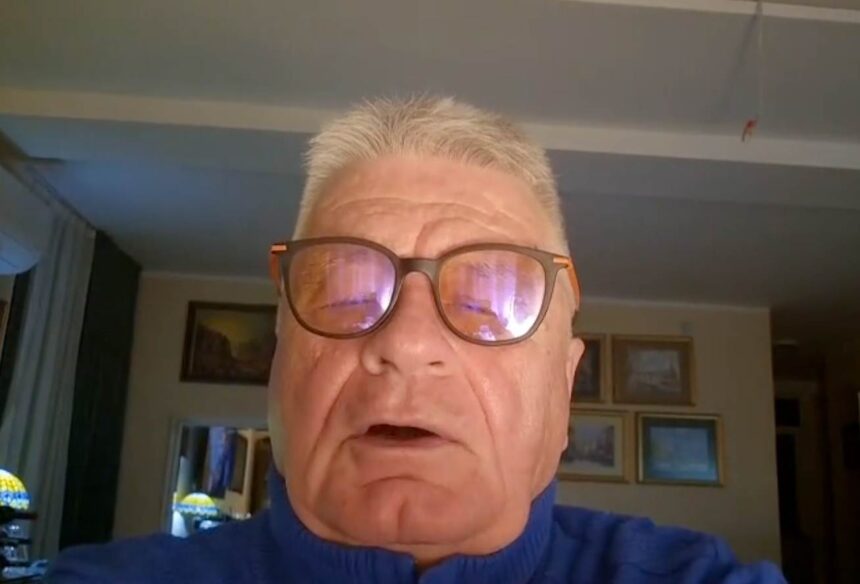
Serbian authorities have arrested publicist and conspiracy-themed writer Dejan Lučić on suspicion of spreading panic and disorder through a TikTok video predicting election fraud and mass protests. The arrest on Saturday, October 24, comes one day before Serbia’s parliamentary election and raises questions about the boundary between unsubstantiated political claims and criminally punishable public alarm.
Belgrade’s Higher Public Prosecutor’s Office said its specialised department for combating high-technology crime ordered the arrest of a 75-year-old man identified by the initials D.L., on suspicion of violating Article 343 of Serbia’s Criminal Code, concerning the causing of panic and disorder. Serbian outlets including Nova.rs and public broadcaster RTS identify the suspect as Lučić.
@ekskaliburz Dejan Lučić – SPREMITE SE! #studentiublokadi #studentipobedjuju #izbori2026 #studentskalista #izbori ♬ original sound – URA!
Prosecutors said he had been ordered held for up to 48 hours pending questioning. An arrest and the prosecution’s allegations do not establish criminal guilt, and the claims attributed to Lučić must not be taken as evidence that election fraud or the predicted events will occur.
What prosecutors allege was said in the TikTok video
According to the prosecution’s October 24 statement, the video claimed that the forthcoming parliamentary vote would be stolen, that large numbers of angry citizens would take to the streets and that police and military personnel would withdraw rather than confront the crowds. Prosecutors characterise those claims as false and allege that the video was intended to generate public fear and disorder.
RTS reported that Lučić suggested President Aleksandar Vučić would declare victory amid accusations of fraud and that more than one million dissatisfied people would protest. These are allegations about Lučić’s statements, not confirmed evidence of an organised plot, official plans or election-day outcomes.
The available prosecution notice does not establish that Lučić had access to confidential information about the vote, security forces or the conduct of election administrators. Nor does it independently demonstrate that the speculative scenario was coordinated with another person or organisation. Votendi has not independently authenticated the full underlying TikTok recording.
Who is Dejan Lučić?
Lučić, a journalist and author whose books include Conspiracy Theory and works dealing with secret services, intelligence networks and geopolitical plots, has long attracted attention for claims about hidden political influence. Serbian newspaper Danas profiled him in July 2026 as a conspiracy-theory writer with a controversial political past.
His public work frequently discusses Russia, intelligence agencies and alleged covert networks. Those subjects and views do not demonstrate that he represents or works for any foreign intelligence service. Claims about secret affiliations require separate evidence.
The Danas profile recounts allegations, dating back to his involvement with the Serbian Renewal Movement in the 1990s, that he had connections to Serbia’s former State Security service (DB). The newspaper reported that Lučić had acknowledged longstanding friendships with former security officials Jovica Stanišić and Franko Simatović. It also noted that he testified at their international tribunal proceedings and denied ever working for State Security. Friendship, published allegations and a reported personal denial must be distinguished from proof of service membership.
His publisher Laguna’s author catalogue lists a substantial body of conspiracy and espionage-themed books. That publishing history explains his media profile, but neither his books nor his political reputation establish the offence now under investigation.
Why an arrest for a political prediction matters before election day
The parliamentary vote is scheduled for Sunday, October 25. In an election already marked by accusations about the electoral process, online disinformation and disputes over media conduct, allegations about large protests and security-force behaviour are especially sensitive.
There are two separate issues. One is whether the facts alleged by prosecutors meet the legal threshold for causing panic or disorder. The other is how authorities apply that standard to political speech, including dramatic predictions that cannot be definitively tested before the event. Serbia’s courts, not the prosecution or social-media commentary, will determine criminal liability.
Neither the prosecution’s interpretation nor Lučić’s reported statements should be conflated with official election results, verified incidents at polling stations or a substantiated forecast of post-election unrest.
Votendi has also covered media-access concerns and suspected social-media bot activity and questions about Serbia’s media regulator’s election-silence statement. Those reports concern distinct events and should not be treated as evidence that the alleged conduct in Lučić’s case occurred.
What remains unknown
As of the October 24 reporting, Votendi has not verified any public response from Lučić or his legal counsel to the specific allegations, nor an independent judicial finding on the matter. The next documented procedural step is questioning within the period of police detention. Any later decision on charges, release or remand would require a separate official confirmation.
Sources: Belgrade Higher Public Prosecutor’s Office (October 24 statement); Nova.rs and RTS (October 24 reports); Danas (July 29 biographical profile); Laguna publisher biography. Updated October 24, 2026. Allegations are reported as allegations, and the suspect is presumed innocent unless proven guilty.