



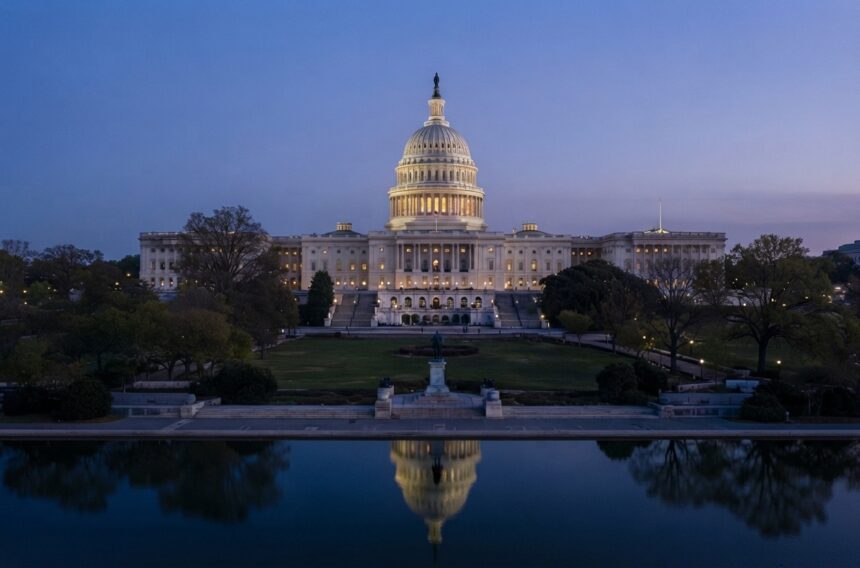
The United States will hold its next regularly scheduled federal general election on Tuesday, November 3, 2026. These are midterm elections: they take place halfway through a presidential term and determine the composition of the next Congress.
House and Senate contests are different
Every one of the 435 seats in the U.S. House of Representatives is up for election every two years. House members represent individual congressional districts and serve two-year terms. The Senate works on a staggered six-year cycle, so roughly one-third of its 100 seats are contested at each federal election.
That structure means there is no single nationwide congressional ballot. Voters choose candidates in their own states and districts, and control of each chamber is determined by the aggregate result across many separate races.
Why a national polling number is not the election result
A national generic-ballot poll can be useful for measuring the broad political environment, but it is not a direct vote for control of Congress. House outcomes depend on district-level races, while Senate control depends on the particular states holding contests in a given cycle.
For that reason, Votendi should distinguish between national indicators and race-specific polling. A national number can provide context; it cannot substitute for state and district data.
What Votendi will track
The U.S. midterms hub will organize polling by contest and geography, keeping pollster, sample population, fieldwork dates and sponsor visible. Where a poll reports registered voters or likely voters, that distinction should remain explicit because the two populations are not identical.
Official results are administered and certified through state-level election processes. The Federal Election Commission provides information on the federal election calendar, while voting administration itself is decentralized. On election night, results should be labeled clearly as reported, projected by an external source, or officially certified, depending on their status.
Sources
- Federal Election Commission – election dates: https://www.fec.gov/introduction-campaign-finance/election-results-and-voting-information/
- USAGov – congressional and midterm elections: https://www.usa.gov/midterm-elections
Editorial note: Keep national generic-ballot polling separate from individual House and Senate contests; do not convert it into a chamber-control prediction without a documented model.