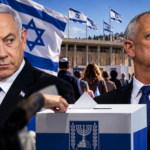
Israeli Prime Minister Benjamin Netanyahu has issued an urgent appeal to right-wing voters as Israel reported its highest election-day turnout at the 10 a.m. checkpoint in 45 years. The record participation is official; Netanyahu’s suggestion that it is concentrated in left-wing strongholds is a political claim, not a finding established by the nationwide turnout figure.
Netanyahu’s election-day warning
In a post on X on Tuesday, October 27, Netanyahu claimed that turnout was unusually high in areas traditionally associated with the left and called on right-wing supporters to vote immediately. His message described the situation as an emergency for his political camp and included the polarising campaign phrase “Right or Palestine”.
The appeal was reported by ANI via The Tribune. Netanyahu also followed up with a call to mobilise Likud supporters. These were appeals from a participant in the election, not independent conclusions about how voters had cast their ballots.
Official turnout reaches 16.68% by 10 a.m.
According to Israel’s Central Elections Committee, 16.68% of eligible voters had voted by 10 a.m. local time (08:00 UTC) on October 27. That compares with approximately 15.9% at the corresponding point in 2022 and represents the highest turnout at that hour since 1981. More than 1.2 million ballots had been cast by the checkpoint.
The figures were reported by Reuters and Anadolu Agency, citing election officials.
Finance Minister Bezalel Smotrich similarly attributed the high early turnout to Arab communities and left-wing areas. But The Jewish Chronicle noted that the Central Elections Committee’s national turnout announcement did not identify the political affiliation of those voting. High turnout is not, by itself, proof that any party or coalition is leading.
Why turnout matters in the Knesset contest
More than 7.3 million Israelis are eligible to vote for the 120-seat Knesset, where a governing majority requires at least 61 seats. With Israel’s proportional electoral system and a 3.25% threshold for parties to enter parliament, changes in turnout across different communities can affect seat distribution. They cannot be translated into seats from the turnout total alone.
Netanyahu and opposition figure Gadi Eisenkot entered election day after polling suggested a fragmented parliamentary picture. Eisenkot visited Kibbutz Nir Oz on Tuesday and highlighted his pledge of political change, according to Reuters. Both political camps are trying to mobilise their supporters, but their mobilisation claims should not be mistaken for results.
When will Israel’s election results be available?
Most polling stations are due to close at 10 p.m. Israel time on October 27 (9 p.m. in mainland Europe, including Croatia). Broadcasters may release exit polls when voting ends; actual votes will then be counted and official returns published progressively. Exit polls and partial returns should be distinguished from the final allocation of Knesset seats.
Follow Votendi’s Israel election live results and coalition-seat tracker for verified results as they become available, and read our election-day guide to Netanyahu, Eisenkot and the 61-seat threshold for context.
Data snapshot: 10:00 a.m. Israel time, October 27, 2026. The official turnout figure measures participation, not support for any candidate or bloc. Sources: Central Elections Committee figures as reported by Reuters and Anadolu Agency; ANI/The Tribune for Netanyahu’s statement; The Jewish Chronicle for turnout context.