



A new KAN News poll has shifted Israel’s electoral balance toward Prime Minister Benjamin Netanyahu’s bloc, even as Gadi Eisenkot’s Yashar remains the largest individual party. With 16 days remaining before the October 27 election, neither political camp has the 61 seats required for a parliamentary majority.
- Eisenkot leads the party rankings, but Netanyahu’s bloc is larger
- Ofer Winter’s party changes the bloc arithmetic
- Leadership preferences tell a different story
- Undecided voters and the electoral threshold matter
- Other surveys underline the uncertainty
- What to watch before October 27
- Sources and image credit
A Kantar Israel survey for KAN News, published Sunday, October 11, projects 53 seats for Netanyahu’s bloc and 50 for the main anti-Netanyahu bloc in the 120-member Knesset. The Arab parties are projected to win 13 seats, while the nonaligned Reservists–Economic alliance receives four.
The latest figures compare with 51 seats for Netanyahu’s bloc and 52 for the opposing camp in KAN’s October 4 survey, according to Israeli reporting of the new poll. The shift is a comparison within one pollster’s series, not a forecast of the election result.
Eisenkot leads the party rankings, but Netanyahu’s bloc is larger
Gadi Eisenkot’s Yashar receives 22 seats, ahead of Netanyahu’s Likud on 20. The B’Yachad alliance headed by Naftali Bennett and Yair Lapid follows with 12, while Itamar Ben-Gvir’s Otzma Yehudit rises to nine.
Here is the complete seat breakdown of the October 11 KAN/Kantar poll:
| Party or electoral list | Projected Knesset seats |
|---|---|
| Yashar (Gadi Eisenkot) | 22 |
| Likud (Benjamin Netanyahu) | 20 |
| B’Yachad (Bennett–Lapid) | 12 |
| Otzma Yehudit | 9 |
| The Democrats | 8 |
| Yisrael Beytenu | 8 |
| United Torah Judaism | 8 |
| Joint List | 8 |
| Shas | 7 |
| Religious Zionism–Zehut | 5 |
| Ra’am | 5 |
| People of Israel (Ofer Winter) | 4 |
| Reservists–Economic Party (Hendel–Zelekha) | 4 |
| Total | 120 |
Source: KAN News / Kantar Israel, published October 11, 2026. Figures represent one survey’s projected seat distribution, not election results or a Votendi polling average.
Ofer Winter’s party changes the bloc arithmetic
A significant movement concerns Ofer Winter’s People of Israel party, which was below the 3.25% electoral threshold in KAN’s previous poll but now receives four seats. The survey counts Winter’s party within Netanyahu’s wider bloc.
Otzma Yehudit also increases from eight to nine seats. Meanwhile, Likud moves from 21 to 20, Religious Zionism–Zehut from six to five, and Shas from eight to seven. These changes, together with Winter’s party entering the projected Knesset, leave Netanyahu’s bloc at 53 seats, eight short of a majority.
The principal anti-Netanyahu camp holds 50 seats, 11 short of the threshold. The 13 seats projected for Arab parties and the four projected for the Hendel–Zelekha alliance cannot automatically be assigned to either of the two principal blocs. Post-election coalition agreements will determine whether a government can be formed.
Leadership preferences tell a different story
The survey also measured attitudes toward possible prime ministers. In a direct comparison, 43% chose Eisenkot as more suitable for the position, compared with 38% for Netanyahu. In a separate question comparing Netanyahu with Bennett, 40% selected Netanyahu and 36% selected Bennett, according to ICE’s October 11 report.
These are respondents’ stated leadership preferences, not Knesset vote shares. They should not be combined with the seat projections or presented as a prediction of who will lead the next government.
Undecided voters and the electoral threshold matter
Among respondents to the KAN/Kantar survey, 30% said they had not yet decided which party they would support. Israeli reporting identifies a sample of 552 respondents. Fieldwork dates and a margin of error have not been independently confirmed in the public material reviewed for this article.
Israel elects all 120 lawmakers in a single national proportional-representation contest, with a 3.25% electoral threshold. Parties near that threshold can therefore change the parliamentary seat map even if their vote-share movements appear small.
That makes the contrasting fortunes of Winter’s party and the nonaligned Hendel–Zelekha alliance particularly relevant as the campaign enters its final stretch. Votendi’s Knesset election guide explains how the threshold and seat allocation work.
Other surveys underline the uncertainty
The latest KAN findings are not identical to those from other Israeli media and polling organisations. For example, a Maariv polling analysis published October 11 described different seat distributions across Maariv, Channel 13 and KAN surveys, with no unambiguous parliamentary majority for either leading camp.
It is important to distinguish movement within a pollster’s own series from differences across polling companies, which may reflect survey design, sampling, fieldwork periods or treatment of smaller parties. One new poll does not independently establish a lasting national trend.
What to watch before October 27
Israel’s upcoming election takes place amid continuing debate about security, government accountability and the consequences of the Hamas-led attack of October 7, 2023, and the wars that followed. Those subjects remain central to the campaigns of Netanyahu and his principal challengers.
But the October 11 seat numbers also highlight a structural question: the party that leads the rankings is not necessarily part of the bloc with the most projected seats, and neither fact by itself determines who can form a government.
The key developments to follow through election day are the performance of smaller parties near the threshold, changes in undecided voters’ responses, and the publicly stated coalition positions of the parties that win Knesset representation.
The latest KAN/Kantar poll therefore shows a larger Netanyahu bloc, Yashar leading the individual party rankings, and no 61-seat majority for either principal camp.
For updates, election background and the latest individual surveys, follow the Votendi Israel Knesset Election 2026 hub. For additional coalition context, see Votendi’s earlier polling analysis.
Sources and image credit
Poll data: KAN News polling center; details and comparison: ICE, October 11, 2026; cross-poll context: The Jerusalem Post, October 11, 2026.
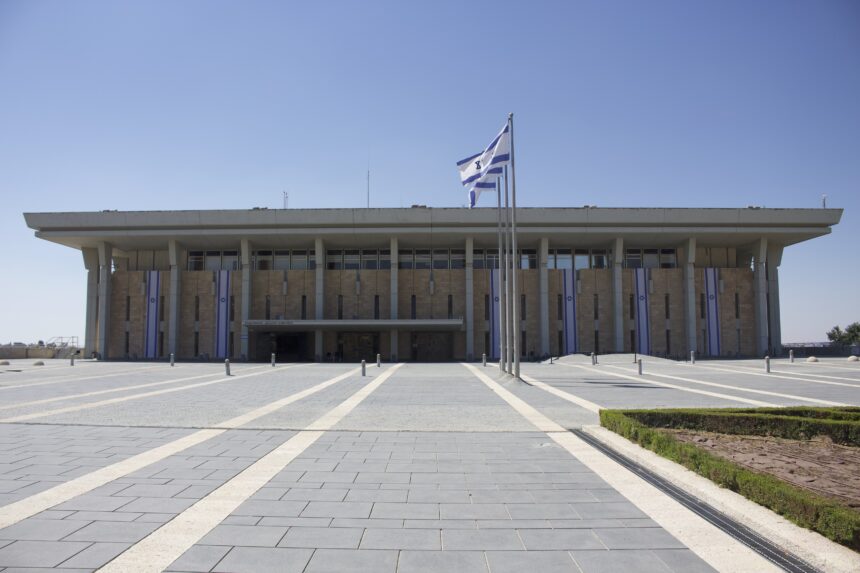
Featured photograph: Clema12 / Wikimedia Commons, 2022, CC BY-SA 4.0. Image resized for publication.