



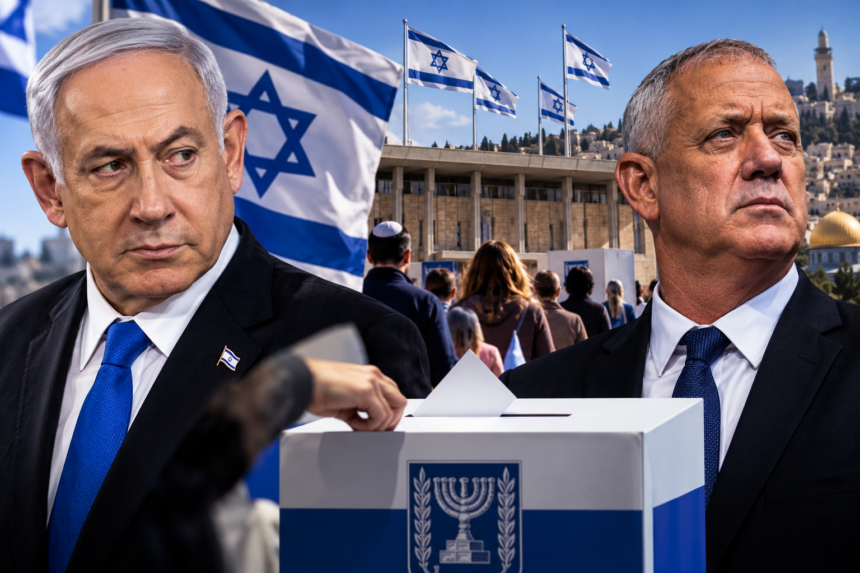
Israelis are voting on Tuesday, October 27, in a parliamentary election that will determine the makeup of the 120-seat Knesset and shape the next coalition government. Prime Minister Benjamin Netanyahu’s Likud faces a challenge from parties led by former military chief Gadi Eisenkot and other opposition figures, while the distribution of seats across blocs could matter as much as the ranking of individual parties.
Polling stations open as Israel chooses its next Knesset
Polling stations opened at 7 a.m. Israeli time and are scheduled to close at 10 p.m. local time (9 p.m. in Croatia). More than 7.3 million voters are eligible to cast ballots at roughly 12,000 polling stations, according to election-day preparations reported by Israeli media. Television exit polls are expected after voting closes; they are estimates, not counted ballots.
Israelis elect parties to the Knesset rather than voting directly for a prime minister. After the results are determined, coalition negotiations will establish who can seek to govern. A governing majority requires at least 61 of 120 seats.
Netanyahu, Eisenkot and an uncertain coalition equation
Netanyahu is campaigning amid debate over security, the October 7, 2023 attacks, the wars that followed and responsibility for political decisions since then. Eisenkot, leading the centrist Yashar party, has emerged as a prominent challenger. Former prime minister Naftali Bennett and other opposition parties also play important roles in potential coalition combinations.
Importantly, a strong result for one opposition party would not automatically produce an opposition government. The positions of religious and Arab-led parties, disagreements within the opposition and the electoral threshold can all affect how the 120 seats translate into a workable coalition.
What the final polls actually measured
Final pre-election surveys suggested a closely divided political landscape, but differed substantially in their projections. A Zman Yisrael survey reported by The Times of Israel on October 23 put the two main Jewish-led blocs at 51 seats apiece, below the 61-seat majority threshold. It projected Eisenkot’s Yashar at 23 seats and Likud at 21. These figures are one poll’s estimates, not an election outcome.
Other surveys produced different results depending on likely-voter assumptions, party support and whether smaller lists would clear Israel’s 3.25% electoral threshold. Polling should not be conflated with exit polls or actual vote totals.
When to expect results
Israel’s major broadcasters are expected to publish exit polls when polling stations close at 10 p.m. Israel time on Tuesday. Ballot-counting information will follow through the Central Elections Committee. Early projected Knesset seats can change as counting progresses, particularly for parties close to the threshold.
Even once the vote count becomes clear, naming the next prime minister may require negotiations among multiple parties. A parliamentary seat projection is therefore not the same as a confirmed new government.
Follow the election on Votendi
Votendi will distinguish among pre-election surveys, broadcasters’ exit-poll seat estimates and officially counted results as new information becomes available. For broader coverage and electoral context, see our elections overview and guide to Knesset seat allocation.
Sources: Associated Press election-day explainer; The Guardian election live coverage; The Times of Israel, final Zman Yisrael poll; Election arrangements as reported October 26.