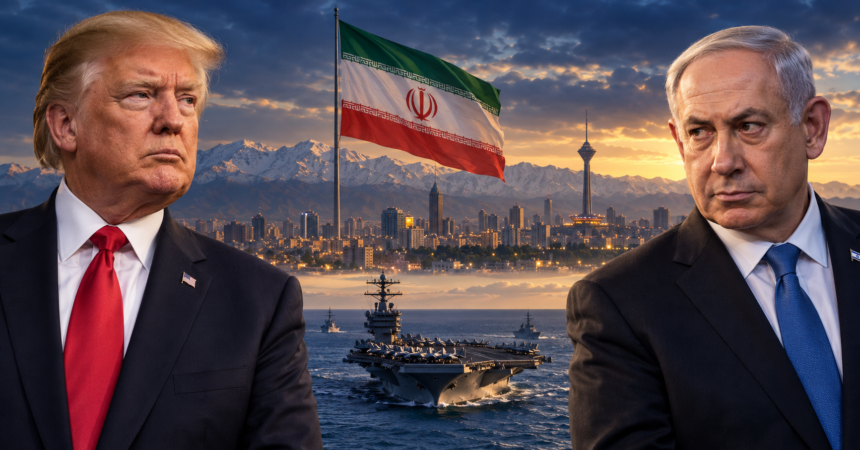
US forces could launch a major operation against Iran within 96 hours of an order from President Donald Trump, according to CNN reporting cited by The Jerusalem Post. But that conditional timetable does not establish that an attack will happen within the next four days.
The report arrives at a politically sensitive moment: Israel votes on October 27, while Americans elect a new Congress on November 3. It brings military preparations into two campaigns in which security, leadership and the costs of conflict are already central issues.
Military readiness is not an order to attack
According to The Jerusalem Post’s account of CNN’s reporting, two US officials said American forces were positioned to carry out a major operation within 96 hours of receiving presidential approval.
The same report said Trump had not made a final decision about major military action after the midterms. A source briefed on the matter said US officials had urged Israel to hold off on attacking, potentially until after the American vote.
The distinction is essential: the reported 96-hour window describes how quickly forces could act after authorisation. It is neither a confirmed attack date nor evidence that authorisation has been given.
For voters assessing the news, three separate questions therefore remain: what military options are available, whether a president chooses to use them, and when any operation would begin. Readiness answers only the first.
Israel’s campaign brings Iran back into focus
On the eve of Israel’s election, Benjamin Netanyahu highlighted Trump’s endorsement and suggested the two leaders could resume military action against Iran, Reuters reported.
His challenger, former military chief Gadi Eisenkot, also praised Trump while saying he would cooperate with the US president if elected. The exchanges place the relationship with Washington alongside the competing claims to security leadership in the final campaign stretch.
However, separate reports about possible Israeli escalation have drawn explicit denials. Netanyahu’s office dismissed reporting about a confrontation with military leaders, while Defence Minister Israel Katz denied an intention to attack Iran before the election, according to AP. Those responses must be considered alongside accounts attributed to unnamed sources.
Why the American election calendar matters
The political pressures in Washington differ from those in Israel.
Reuters links the unpopular Iran war to rising fuel prices in the United States, making the conflict relevant to the economic frustrations confronting Republicans before the midterms.
That creates a potential tension between demonstrating military resolve and avoiding further economic disruption. It does not prove why any particular operational decision has been taken.
Likewise, reporting that officials expect possible action after November 3 should not be treated as a commitment to launch it. Election timing is part of the reported deliberations; the ultimate decision remains uncertain.
Two elections, different decisions
Israeli voters are choosing the parliament from which the next government must emerge. American voters are deciding control of Congress while Trump remains president.
Neither election result, by itself, would constitute an order for military action. Their significance lies in how they could change the political environment surrounding future decisions: leadership, coalition bargaining, public pressure and scrutiny.
For election coverage, the useful question is therefore broader than whether a strike is imminent. It is how the prospect of renewed conflict is being presented to voters, and what those voters can actually determine.
What to watch next
The clearest developments would be an explicit announcement of authorisation, an official change in stated policy, or independently verified military action. Until then, reports about preparations should retain their conditional wording.
Israel’s result and subsequent government negotiations will provide one part of the political picture. The US midterms will provide another.
For now, the central fact remains limited but consequential: officials reportedly describe forces ready to act quickly if ordered. A capability to strike within 96 hours is not a countdown to war.