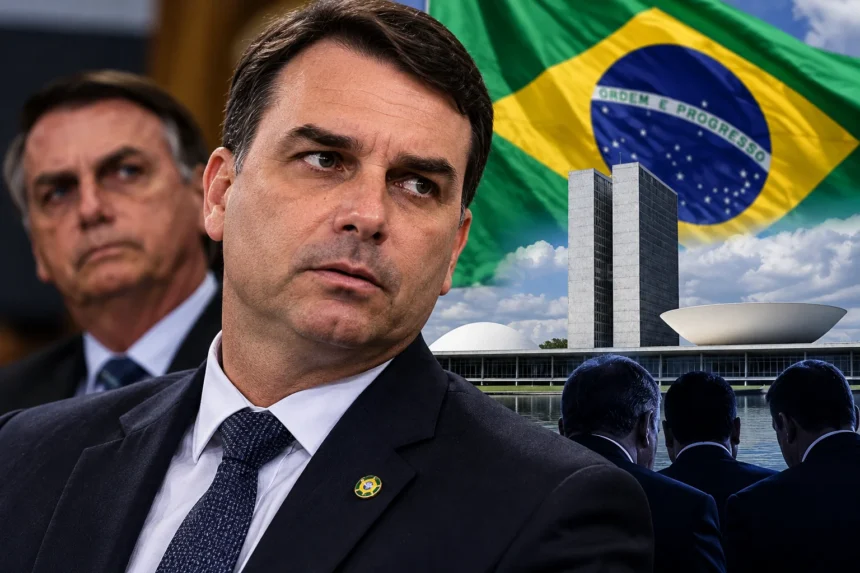
Flávio Bolsonaro’s attempt to claim political leadership from Miami has drawn public criticism from figures in his own political camp, deepening a dispute over how Brazil’s right should respond to President Luiz Inácio Lula da Silva’s re-election.
On 29 October, Liberal Party (PL) president Valdemar Costa Neto said he disapproved of Bolsonaro’s letter, issued after the defeated presidential candidate arrived in the United States. According to Reuters, Costa Neto said his party wanted to move the country forward rather than endorse the declaration.
What changed: the criticism now comes from inside Bolsonaro’s camp
Bolsonaro said he would lead Brazil’s opposition from abroad, described himself as the country’s rightful political leader and alleged electoral wrongdoing. No substantiated evidence of fraud has been presented. His own Liberal Party has recognized Lula’s election victory, even as Bolsonaro continues to dispute the outcome.
Senator Rogério Marinho, who managed Bolsonaro’s campaign, continued to recognize the former candidate as an important figure on the Brazilian right. But Marinho also said that neither he nor the party could allege electoral fraud without evidence. São Paulo Governor Tarcísio de Freitas, who campaigned for Bolsonaro, likewise called for respect for the result.
Other parties that supported Bolsonaro during the runoff also affirmed the legitimacy of the electoral process. União Brasil and the Brazilian Democratic Movement (MDB) both emphasized the importance of respecting institutions and accepting the result, according to Reuters.
What the official count shows
The dispute does not change the result of Brazil’s 25 October 2026 presidential runoff. The official result tracked by Votendi shows Lula with 64,256,232 votes (51.79%) against Bolsonaro’s 59,826,041 (48.21%). That is a margin of 4,430,191 votes, or 3.58 percentage points.
These are completed election results, not pre-election polling estimates or an assessment of the credibility of any individual political claim. Readers can review the recorded result and election-night archive in Votendi’s Brazil 2026 results tracker.
What this means for Brazil’s opposition
The new development is a distinction between Bolsonaro’s personal challenge and the positions of several leaders who backed him. His supporters delivered nearly 60 million votes in the runoff, giving him a substantial electoral constituency. But public statements from his party leader, campaign manager and other allies show that support for his candidacy does not necessarily translate into support for contesting the result.
Bolsonaro traveled to the United States after receiving a Brazilian court order to surrender his passports in connection with an investigation. He denies wrongdoing. The Trump administration allowed him to enter the country, but President Donald Trump declined to endorse his claim to political leadership.
The immediate question is therefore not who won the presidential election — the official count has settled that — but how opposition politicians will organize after an election their party leadership has acknowledged. Statements of party support, court proceedings and any formally filed challenges should be assessed separately.
Sources and further reading
Reuters, 29 October 2026: responses from Bolsonaro’s allies and party leaders; Votendi: Bolsonaro’s earlier declaration from Miami; Votendi: official Brazil runoff results.